When Your Brain Betrays Your Bankroll: The Neuroscience of Betting Meltdowns
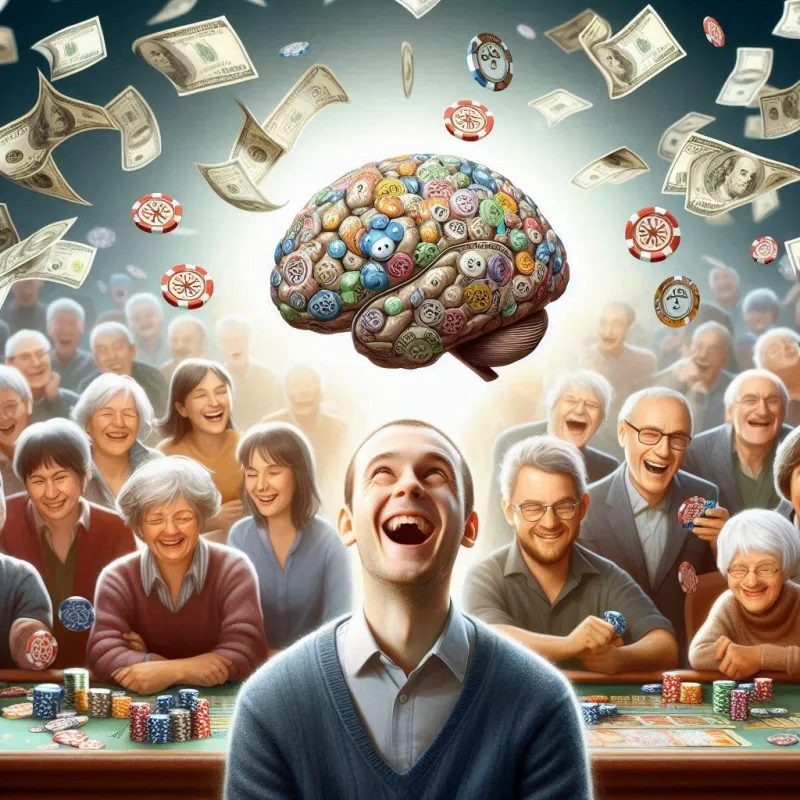
Photo: stressed person looking at phone with gambling losses brain concept, via gamblingcity.net
Here's a story that probably sounds familiar.
A guy — let's call him Marcus — spent six months grinding a college football system. Careful unit sizing, disciplined line shopping, meticulous record keeping. He was up 22 units heading into a November Saturday. Then his first game of the day hit a brutal bad beat on a last-second field goal. He chased. Lost two more. Chased harder. By midnight, most of his six months of work was gone. He didn't change his system. He changed himself — and he couldn't stop it.
Marcus isn't unusual. Versions of his story repeat themselves constantly in betting communities, poker forums, and casino floors across the country. The system wasn't broken. The person was. And the mechanism behind that breakdown isn't weakness of character — it's brain chemistry doing exactly what it evolved to do.
The Dopamine Loop Nobody Warns You About
Most people have heard that gambling triggers dopamine. What's less understood is when and how that dopamine fires — because the timing is what makes it dangerous.
Dopamine isn't primarily a pleasure chemical. It's a prediction and reward signal. Your brain releases dopamine not just when you win, but when you anticipate a win — and, critically, when outcomes are unpredictable. Variable reward schedules, which is exactly what betting produces, generate more dopamine activity than consistent, predictable rewards. This is the same mechanism behind slot machines, social media notifications, and yes, a live parlay with one leg left.
The problem is that dopamine activity also suppresses the prefrontal cortex — the part of your brain responsible for long-term planning, risk assessment, and impulse control. The more activated your reward system gets, the less capacity you have for the rational thinking that made your system work in the first place. You're not making worse decisions because you're tilted. You're making worse decisions because your brain is literally running on different hardware.
Adrenaline Makes It Worse
Layer adrenaline on top of dopamine and you've got a real problem. High-volatility moments — a bad beat, a dramatic comeback, a big win followed immediately by a big loss — trigger a stress response that floods your system with cortisol and adrenaline. This is the fight-or-flight system activating.
In an evolutionary context, that's useful. In a betting context, it's catastrophic. The adrenaline response narrows your focus to the immediate threat (the loss you just took) and compresses your time horizon (you need to fix it now). The concept of "long-term expected value" becomes almost neurologically inaccessible when you're in a stress response. Your brain doesn't want to hear about sample sizes. It wants to act.
Research from behavioral economists like Shlomo Benartzi and Richard Thaler has documented what they call "myopic loss aversion" — the tendency for people to become disproportionately focused on short-term losses when emotionally activated. Bettors aren't immune to this. They're actually more vulnerable to it than most, because the environment is specifically designed to generate exactly the kind of emotional activation that triggers it.
The Case Studies Are Brutal
Betting communities — Reddit threads, Discord servers, the kind of places where serious players actually talk honestly — are full of Marcus-style stories. The patterns are remarkably consistent.
A sharp bettor runs a profitable system. Something goes wrong — a string of bad beats, a key injury that tanks a position, a line move that stings. The emotional response kicks in. The bettor starts making decisions that violate their own rules, often while being completely aware that they're violating them. The self-awareness doesn't help. The behavior continues anyway.
What's striking in these accounts is how often the bettor describes feeling like a passenger. "I knew I shouldn't be doing it" is probably the most common phrase in every post-mortem analysis of a betting meltdown. The knowledge was there. The discipline wasn't — because discipline is a prefrontal cortex function, and the prefrontal cortex was offline.
The Environmental Triggers That Flip the Switch
Beyond the neurochemistry, there are specific environmental factors that make meltdowns more likely. Knowing them is half the battle.
Speed of play. Live betting is more dangerous than pre-game betting for exactly this reason. The faster the feedback loop, the more emotional activation per hour. Slow down the game and you slow down the neurological spiral.
Isolation. Betting alone, late at night, with no social accountability is the highest-risk environment. Having someone in your corner — a friend, a betting partner, even a community — creates external friction that the brain's impulse system has to work against.
Alcohol. This one's obvious but worth saying plainly: alcohol directly suppresses the prefrontal cortex. Drinking while betting is essentially removing the only neurological safeguard you have against the dopamine-adrenaline feedback loop.
Recency bias amplification. The more recent and vivid a loss, the more emotionally weighted it becomes in your decision-making. Keeping a written record of your overall performance — not just today's session — gives your rational brain something concrete to anchor to when the emotional brain wants to go to war.
Building a System Your Brain Can't Break
The bettors who survive long-term aren't necessarily smarter or more disciplined in a character sense. They've usually just built external structures that compensate for the moments when their brain chemistry goes sideways.
Hard stop-loss limits that require a physical action to override — logging out, waiting 24 hours, calling someone — create the kind of friction that buys time for the prefrontal cortex to come back online. Pre-written rules that you commit to when you're calm and rational are more reliable than in-the-moment decisions made when you're activated.
At KrakenBet, we're straight with our players: the games are designed to be engaging, and engagement means emotional activation. That's part of the experience. But understanding what's happening in your head when the stakes get high — and building systems that account for it — is what separates the players who stay in the game from the ones who blow up their bankroll on a random Saturday and spend the next week trying to figure out what happened.
Your brain is not always your friend at the betting window. The smart move is to plan for that before you need to.