Follow the Leviathan: How Whale Bettors Ripple the Market and What Sharp Eyes Can Learn From It
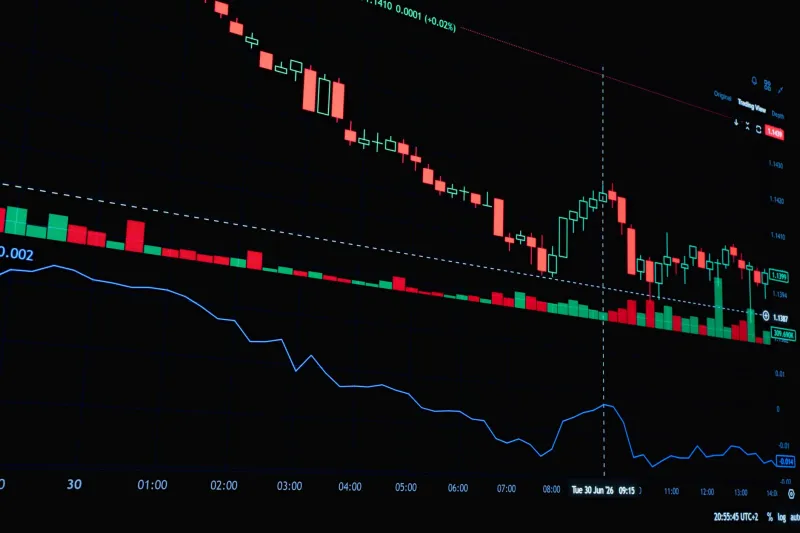
There's a moment, usually somewhere between 48 and 24 hours before a major game, when a line just... moves. Not the slow, grinding drift you see when public money piles in on a primetime favorite. Something sharper. More decisive. The number jumps two or three points in what feels like a single breath, then hangs there — almost daring you to bet into it.
That's a whale surfacing.
Large-volume bettors — the guys dropping five or six figures on a single wager — don't operate the way casual players do. They're not riding vibes or following Twitter takes. They've done the work, built the models, and when they pull the trigger, the market reacts. Understanding how it reacts, and what signals that reaction sends, is one of the most underrated edges available to any serious bettor willing to pay attention.
What a Whale Actually Looks Like to a Sportsbook
First, let's be clear about what we mean. A whale isn't just someone who bets big occasionally. It's a player — sometimes an individual, sometimes a syndicate operating under multiple accounts — who bets with enough volume and consistency to genuinely threaten a book's liability on a given market.
Sportsbooks have exposure limits. Every line they post represents a calculated risk, and when a single player or coordinated group pushes a significant chunk of that exposure in one direction, the book has two choices: accept the action and hedge elsewhere, or move the line to attract money on the other side and rebalance. Most of the time, they move the line.
That movement is the signal.
Steam Moves vs. Slow Burn: Reading the Difference
Not all sharp line movement is whale activity. It's worth distinguishing between a couple of different patterns.
Steam moves are fast and dramatic — a line shifts quickly across multiple books in near-simultaneous fashion. This usually indicates coordinated action, either from a well-known syndicate or a group of connected sharp bettors hitting several books at once before the market can adjust. When you see -3.5 become -5 across four or five major platforms within a 15-minute window, something organized is happening.
Slow burn moves, on the other hand, are subtler. A line creeps a half-point here, another half-point three hours later, without obvious public pressure driving it. This can indicate a single high-limit player making staged bets — placing large action in increments to avoid triggering automatic limits or drawing too much attention. Books still react, but the signal is softer and takes longer to read.
The key is tracking both types across multiple sportsbooks simultaneously. If you're only watching one book, you're getting one piece of a much larger picture.
Liquidity as a Clue
Here's something most recreational bettors completely overlook: betting pool liquidity. On exchange-style platforms and even some traditional sportsbooks, you can see how much money is sitting on each side of a market. When a whale bets into a game, available liquidity on their side of the market often drops sharply — because the book has absorbed the action and pulled back its exposure.
If you're watching a game where the over/under has been sitting with healthy two-way action, and suddenly the liquidity on the over collapses while the line ticks up, something just happened on the under. Someone big just bet it.
This isn't foolproof — books adjust for a dozen reasons — but combined with line movement data, liquidity shifts give you a second data point that significantly increases your confidence in what you're seeing.
The Multi-Book Consensus Signal
Single-book line movement can be noise. A book might shade a line for their own reasons — local market exposure, promotional positioning, or just a conservative risk manager having a cautious day. But when you see the same directional move propagate across multiple major sportsbooks within a short window, that's consensus. That's the market telling you something real happened.
Sharp bettors use line-tracking tools to monitor this in real time. When a move originates at a book known for accepting sharp action — the kind of place that doesn't just take recreational money — and then ripples outward to softer books over the next hour or two, you're watching whale money get digested by the market in real time.
The originating book matters here. A line move at a sharp-friendly book carries more informational weight than the same move at a recreational-focused platform. Learn which books set lines versus which ones simply follow.
Reverse Line Movement: The Counterintuitive Tell
One of the clearest whale signals is reverse line movement — when a line moves against the direction of the majority of bets being placed. If 70% of the public tickets are on the Cowboys, but the line moves from -4 to -3, something is pushing back against all that Cowboys money. That something is almost certainly sharp, high-volume action on the Giants.
Public bettors move ticket counts. Whales move dollars. Sportsbooks care about dollars.
Reverse line movement is one of the most reliable indicators that sophisticated money has entered a market on the side the public isn't on. It doesn't guarantee a winner — nothing does — but it tells you that someone with serious resources and serious research has a strong opinion, and that opinion is directly contradicting the crowd.
Shadowing the Whale Without Getting Crushed
Here's the practical reality: by the time most bettors notice whale movement, the best number is already gone. The line has moved, the value has been squeezed, and betting into a post-whale market means you're getting worse odds on the same information.
The play isn't to blindly tail every steam move. It's to use these signals as one layer of a broader process. If your own analysis already points toward a side, and then you see sharp money confirming that direction, you've got two independent reasons to act — and act quickly, before the market moves further.
Conversely, if you're leaning one way and whale money is flowing the other direction, that's a reason to pause. Not necessarily to abandon your read, but to pressure-test it. Ask yourself what the sharp money might know that you don't.
The Bigger Picture
Watching how large-volume bettors move through the market is really just a form of reading collective intelligence. Whales don't always win — variance is real, and even the sharpest syndicates have losing weeks. But they bring resources, research, and discipline to the table in ways that leave detectable footprints.
At KrakenBet, we're interested in the deep currents beneath the surface — the kind of action that most players never notice because they're too busy watching the scoreboard instead of the market. The bettors who learn to track line movement, monitor liquidity shifts, and interpret reverse action are playing a fundamentally different game than the ones just picking sides based on gut feel.
The leviathan moves. The question is whether you're watching closely enough to see the wake.